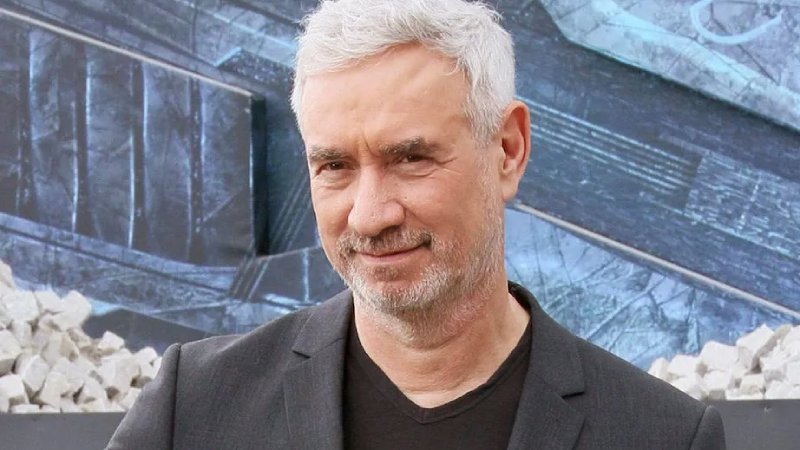
Roland Emmerich
One of Stargate’s original creators says that he is done with the franchise for good — but for reasons that fans might find surprising.
Stargate (1994) feature film director Roland Emmerich told JoBlo’s Chris Bumbray last week that he has given up on his efforts to revive his vision of Stargate. Bumbray caught up with the director at San Diego Comic-Con, where Emmerich was on hand to promote his new Peacock gladiator series Those About to Die.
“The problem there is, it’s a very, very difficult IP,” Emmerich said. “Different people own the IP and it’s very, very difficult to do stuff like that.”
What does he mean by this? Why are Stargate’s rights (supposedly) difficult? MGM does own the rights to the original Stargate feature film and the IP (intellectual property) at large, which it purchased from the film’s original financiers prior to the film’s release in 1994. (Due to some contract shuffling, Lionsgate still holds the home media rights to the movie.) The movie starred Kurt Russell and James Spader, and set a box office record for an October release.
In 1996 MGM turned down a pitch for a sequel film from Emmerich and producer Dean Devlin, opting instead to take Stargate to the small screen. Stargate SG-1 bowed in the summer of 1997, as part of the studio’s ongoing deal to provide original programming to the U.S. cable channel Showtime. It ran for ten seasons and spawned two additional spin-offs, 2004’s Stargate Atlantis and 2009’s Stargate Universe.
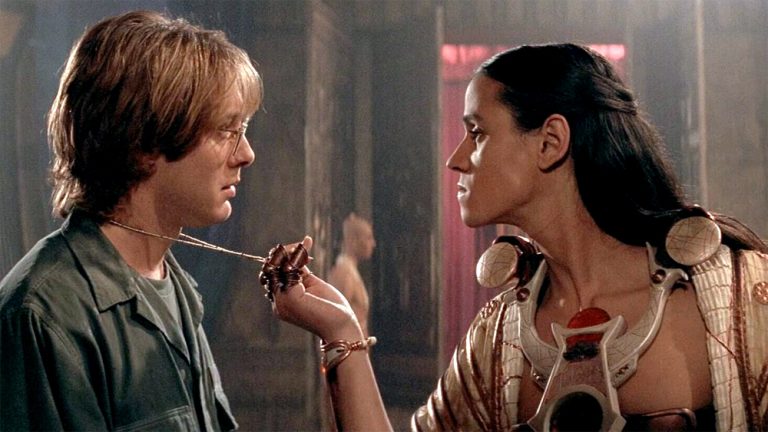
While MGM has full control over the movie property, rights for the TV shows and the continuity they built might be another story. MGM also owns the three Stargate television series outright, but it appears that they might be contractually obligated to seek input from the TV creators when the studio chooses to use the characters, alien species, and the wider lore they created. Samantha Carter, Teal’c, the Goa’uld and the Tok’ra, the Asgard, zat guns, the Wraith and Destiny — all of this familiar mythology was created by Jonathan Glassner, Brad Wright, Robert C. Cooper, and the writing team that steered the ship from 1997 to 2011.
SCRAPPED RELAUNCH
A revival of Emmerich and Devlin’s feature film plans was given the green light by MGM in 2014, with the first of what they hoped would be a rebooted trilogy. The stated intention here was to start over with a remake of the original film, creating a new continuity that would not continue the story but instead live alongside the established television lore as a different universe.
“Twenty years later, we can’t really do part two,” Devlin said at the time. “We have to start over from the beginning. So let’s reboot the series, put in all the things we couldn’t the first time, and set it up properly.”
Writers Nicolas Wright and James A. Woods were hired to pen the movie’s script, but by 2016 development on the project stalled out — evidently because the principals involved could not find an agreeable way forward. By November of that year producer Dean Devlin stated that the film was dead. “There are just a lot of things that have to fire at the same time, and there was a moment where I thought it was all firing at the same time, and then it all kind of fell apart,” he told Empire Magazine at the time. (In later years he expressed dissatisfaction with the script’s direction.)
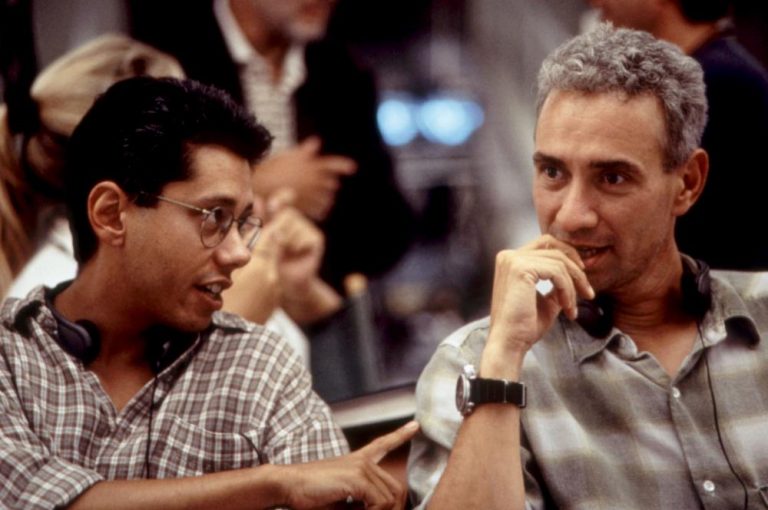
Dean Devlin and Roland Emmerich on the set of Independence Day in 1996
“I think if we did Stargate right, the fans would like it and we could do something really good. But if we screw it up, they’ll reject it. As they should. But I kind of don’t want to do it if I think that we’ll screw it up, and that’s one of the things that’s holding us back.”
Two years later Devlin had fully embraced independent production, deciding that he did not want to work within the confines of the big studio system again. And that meant he wasn’t going back to Stargate. “I really came to the realization that I’m not the kind of guy who should ever work at studios,” he said. “I excused myself from both Stargate and from Independence Day, so they may be going forward, but I don’t know. I’m not involved anymore.”
Finally, in 2018 or 2019 Emmerich took one more shot at Stargate — this time with a pitch for a television series. Little is known about this project, which had a completed pilot script, but by 2020 the studio appears to have passed on it. A competing project, in the form of a pilot written by Stargate SG-1 co-creator Brad Wright, was being readied to take out to potential network and streaming partners when the COVID pandemic shut down film and television production worldwide.
AMAZON’S PROBLEM
Rebooting Stargate with a new movie trilogy wasn’t much of a rights problem back in 2014. Emmerich and Devlin were clear at the time that they planned to start over, not only avoiding the TV characters and continuity but also remaking a version of Stargate’s origin story. But today it looks like the director does not plan to return with any future pitches: Emmerich says that he’s done with Stargate.
“I don’t want to do it, really,” he told JoBlo. “I gave up.”
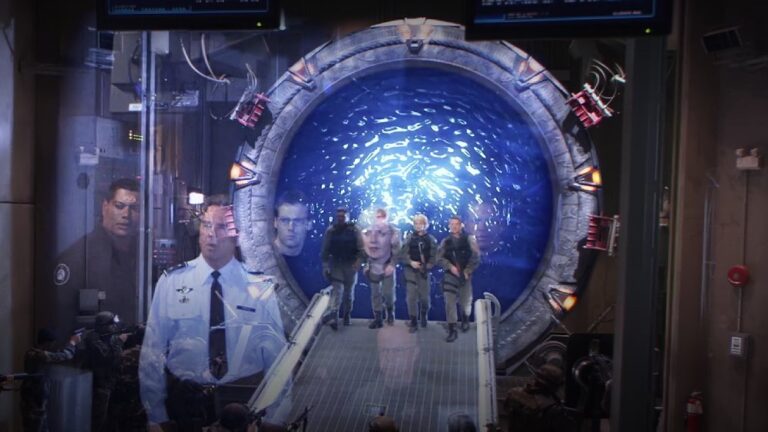
Stargate SG-1: “Ripple Effect”
Meanwhile Amazon purchased MGM and all its assets in 2022 — including the Stargate franchise. Their joint production arm now operates under the banner of Amazon MGM Studios.
If we are understanding Emmerich’s comments about the “difficult IP” rightly, the studio would appear to have three options for continuing Stargate:
- (1) seek input from the TV series’ creators and continue the continuity they established (even if that doesn’t mean producing Wright’s fourth series, or hiring him as showrunner);
- (2) buy out those contractual obligations with a dump truck of money; or
- (3) reboot the franchise, starting over with a new creative direction or otherwise avoiding the characters and concepts that were created by Glassner, Wright, and company.
Certainly none of this is insurmountable — and studio executives get paid to work out such deals every day — but it does explain the added complications in green-lighting a new series.
Today long-time Stargate fans and newcomers alike are waiting on the studio to issue any kind of public statement about their plans for the franchise — difficult or not. Will Stargate continue to remain on hold, because the rights are too complicated (or perhaps for some other reason still unknown to the public)? Or will they find a way to get it done and continue one of contemporary science fiction’s most beloved universes?
Fans are still waiting.